Connections Between Regional Payment Preferences and Game Selection Habits in Portable Casino Environments
Written by Tina Reed · Sep 21, 2026
Connections Between Regional Payment Preferences and Game Selection Habits in Portable Casino Environments
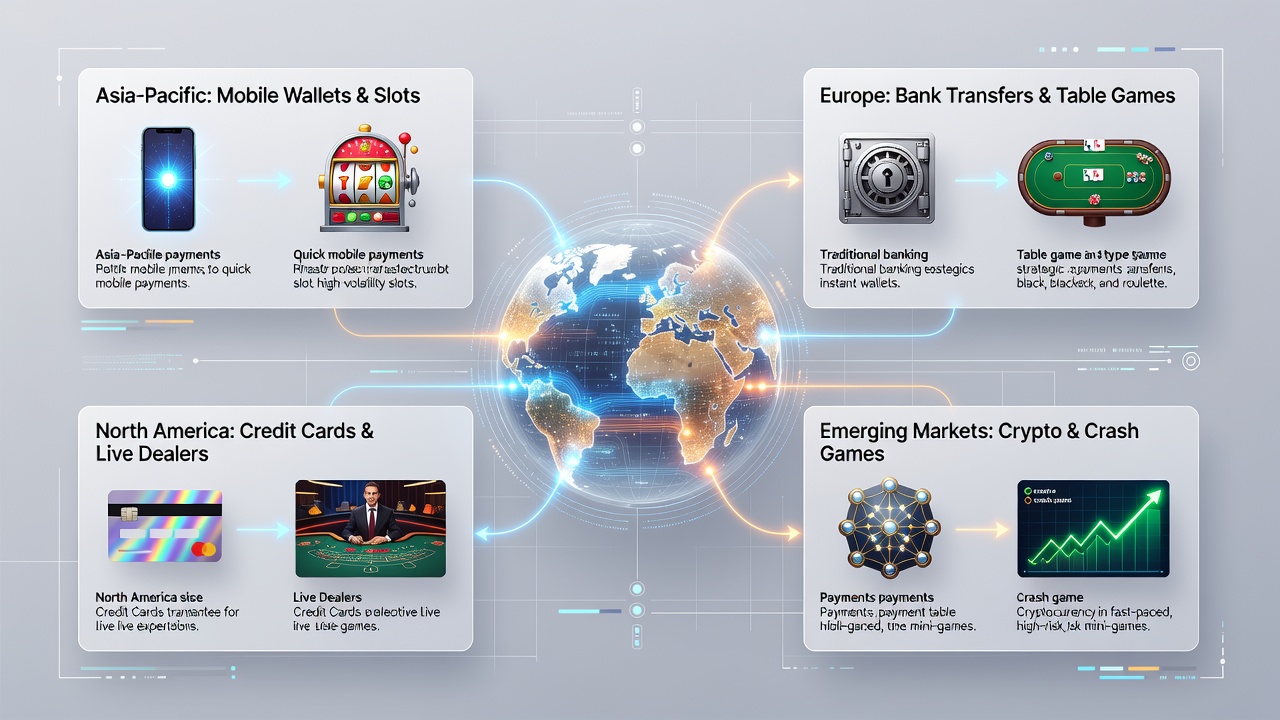
Payment preferences vary sharply across regions, and those differences shape how players select games on portable platforms. Data collected through 2026 shows that users in areas with high adoption of instant digital wallets often gravitate toward quick-cycle slots, while regions favoring bank transfers or prepaid cards show stronger engagement with extended-session table games. Regulatory filings and operator reports document these patterns consistently, and analysts track them through transaction logs and session durations rather than through direct surveys alone.
Payment Landscapes Across Key Markets
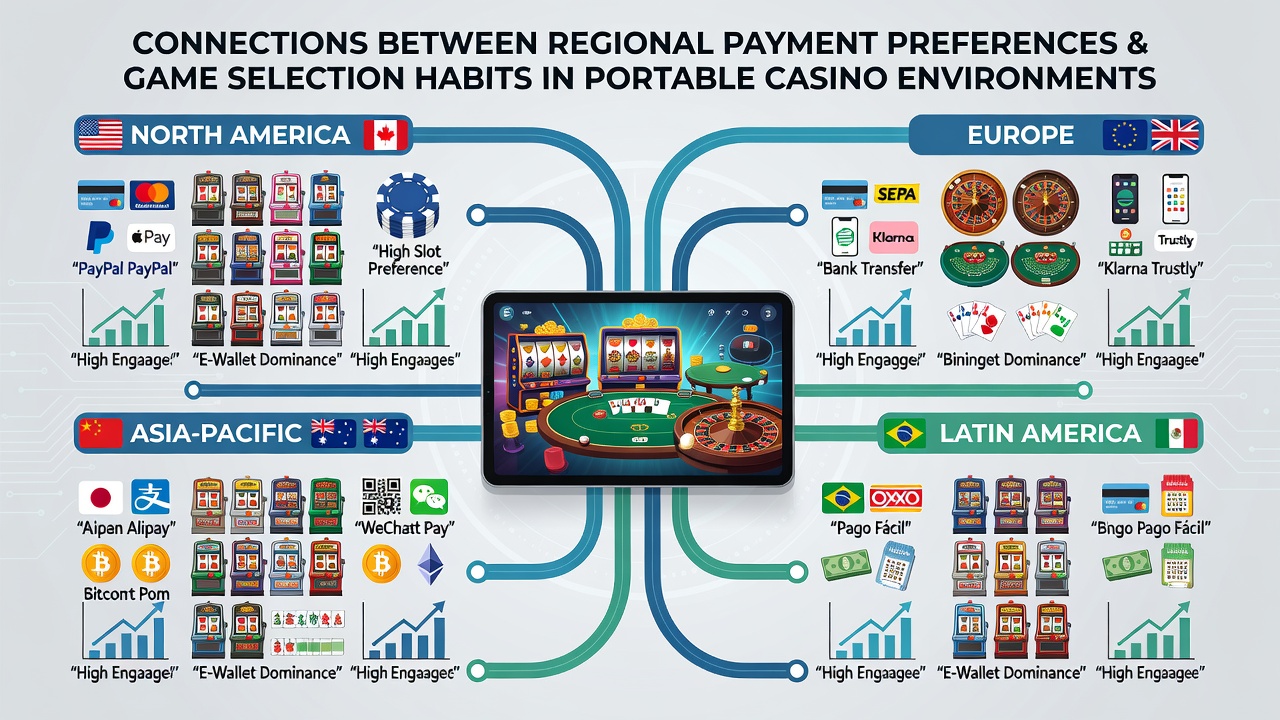
Europe demonstrates a split where countries with established e-wallet infrastructure, such as those using local instant transfer services, record elevated play volumes in high-frequency reel games. In contrast, markets that rely more on traditional card processing display steadier activity in blackjack and roulette variants that permit longer decision times. Australian regulatory summaries from state gaming authorities indicate similar divides, with digital payment users showing preference for games that complete rounds in under thirty seconds on average.
North American patterns, drawn from state-level revenue disclosures, reveal that crypto-enabled accounts correlate with selections of progressive jackpot slots and live dealer options that accept rapid micro-transactions. Canadian provincial data, including reports from Ontario's iGaming framework, notes that players using Interac or similar local transfers maintain longer sessions in video poker and multi-hand formats. These observations come from aggregated transaction data released by operators and cross-checked against regional banking statistics.
How Payment Speed Influences Game Type Selection
Transaction completion times affect game choice directly. Faster settlement options reduce friction between rounds, encouraging players to sample games with frequent small wins or bonus triggers. Slower methods, which may require additional confirmation steps, align with titles that reward sustained attention, such as strategy-heavy card games. Industry analyses from the European Gaming and Betting Association highlight that operators adjust game libraries on portable apps based on dominant payment rails in each jurisdiction, a practice confirmed in multiple quarterly filings.
One study of cross-border mobile traffic found that regions with prepaid voucher systems produced higher engagement metrics for games featuring autoplay functions, whereas credit-card dominant markets showed preference for titles with manual spin controls and adjustable bet sizing. The correlation appears in session length statistics rather than in self-reported player surveys.
Regional Examples from 2026 Data
As of September 2026, transaction reports from several Asian markets indicate that local digital wallet users concentrate activity in themed slot libraries with rapid bonus rounds, while bank-linked accounts favor baccarat tables with extended betting windows. Latin American operators report parallel trends where instant payment methods coincide with increased play of crash-style and multiplier games. These patterns emerge from anonymized ledger reviews shared in industry consortium meetings.
European operators note that players in nations with strong open-banking regulations migrate between slot and table sections more fluidly when using instant payout services, whereas those on legacy card systems remain within single categories for longer stretches. The data appears in compliance reports submitted to national authorities and aggregated by trade groups.
Technical and Regulatory Factors at Play
Platform design accommodates these preferences through localized payment gateways that surface compatible game filters. Regulatory requirements in certain jurisdictions mandate clear separation between deposit methods and game access, yet operators still observe statistical links between chosen funding sources and subsequent selections. Research from academic centers studying digital gambling behavior confirms that these correlations hold after controlling for age and device type.
Portable environments amplify the effect because session data transmits in real time, allowing operators to surface recommendations based on payment history. Such systems appear in multiple markets without violating data protection rules, as the connections derive from internal analytics rather than external profiling.
Conclusion
Regional payment preferences connect to game selection habits through measurable differences in transaction speed, session duration, and category engagement. Data from regulatory filings, operator reports, and industry associations in Europe, North America, Australia, and Asia document these links consistently through 2026. The patterns inform how operators configure portable casino libraries, though the underlying relationships remain statistical rather than deterministic. Continued monitoring of transaction flows will likely reveal further refinements as payment technologies and regulatory frameworks evolve.